
Rapid Inventory Response Keeps Refrigeration Production Moving
Challenge
An OEM manufacturer in the commercial refrigeration industry experienced an unexpected increase in production demand after receiving a significant new order. While the additional business represented an important opportunity, it also created an immediate supply chain challenge.
To meet the increased production requirements, the customer needed access to critical EC fan assemblies much sooner than originally anticipated. Without sufficient components available, the manufacturer faced the possibility of production delays that could prevent finished equipment from being completed and delivered on schedule.
Attempting to secure additional inventory after the demand spike could have created additional problems. Expedited international shipping, including costly air freight, may have been required to shorten normal transportation timelines. The customer could also have been forced to search the spot market for available components, potentially resulting in higher costs and less control over supply.
At the same time, changes in U.S. tariff policy presented another source of uncertainty. Components brought into the country after new tariffs took effect could be subject to higher costs, adding financial pressure to an already time-sensitive situation.
Fortunately, the customer and EC Fans & Drives had already taken steps to prepare for changes in demand. Rather than operating solely on a purchase-order-by-purchase-order basis, the two companies had established an inventory stocking agreement designed to provide greater availability of the fan assemblies required for the customer's production program.
When demand increased unexpectedly, that preparation became critical.
Solutions
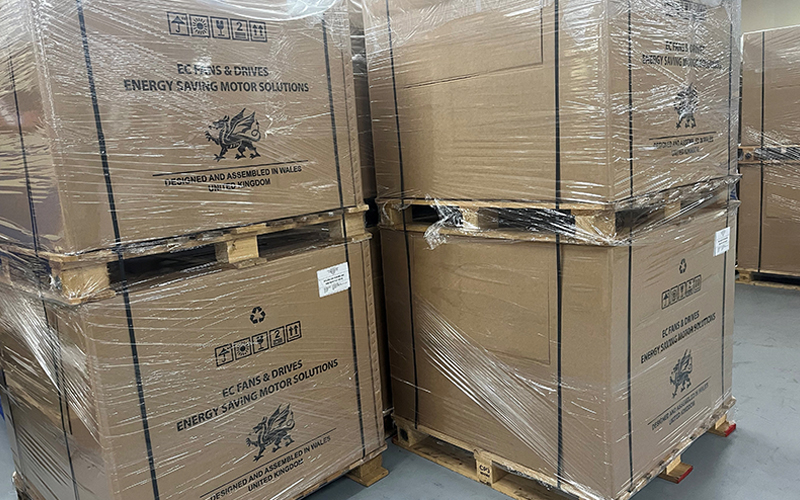
EC Fans & Drives was able to respond immediately because inventory of the customer's required fan assemblies had already been pre-positioned and was available from a U.S. warehouse.
The stocking program provided a buffer between the customers’ changing production requirements and the longer lead times that can accompany international manufacturing and transportation. Instead of beginning the sourcing process only after the customer received the new order, critical inventory had already been secured and positioned to support production.
Result
The customer received immediate access to the critical EC fan assemblies needed to support the increased production requirements. As a result, the manufacturer was able to continue its build schedule without disruption and meet the demands associated with the large new order.
Because inventory was already positioned in the United States, the customer avoided the need for costly air freight and emergency spot-market purchases. The previously secured inventory also helped protect the program from rising costs associated with changes in tariff policy.
Most importantly, the unexpected demand increase did not become a production crisis. What could have resulted in component shortages, schedule delays, and increased costs was instead handled through normal domestic fulfillment, allowing the customer's manufacturing operations to continue as planned.
The experience demonstrates the value of looking beyond individual purchase orders when managing critical components. Demand forecasts can change quickly, particularly when an OEM receives a significant new order or experiences an unexpected increase in production requirements. When the supply chain is not prepared, securing additional components can become both expensive and time-consuming.
For this customer, the inventory stocking agreement with EC Fans & Drives provided the flexibility needed to respond to an opportunity rather than being limited by component availability. Pre-positioned inventory, domestic availability, and proactive supply chain planning turned a potentially high-risk situation into a smooth and cost-effective outcome.
The successful response reinforced the value of the ongoing relationship between the two companies. By planning for future demand and maintaining inventory readiness, EC Fans & Drives helped the customer protect their production schedule, control unexpected costs, and respond quickly when business needs changed.